




Custom Shopify App Development: Do You Really Need It?

TABLE OF CONTENT
The Case for Off-the-Shelf Apps: Why They Work
What Is Custom Shopify App Development?
When Do You Actually Need Custom Shopify App Development?
Decision Matrix: Off-the-Shelf vs. Custom Development
The 2026 Market Context: Why Custom Matters Now
Partnering with Expertise Helps You Get It Right
How to Decide: A Simple Framework
Conclusion
For many Shopify merchants, the App Store is a perfect starting point. With over 13,000+ apps available at the click of a button, you can add loyalty programs, advanced filtering, and email automation to your store in minutes.
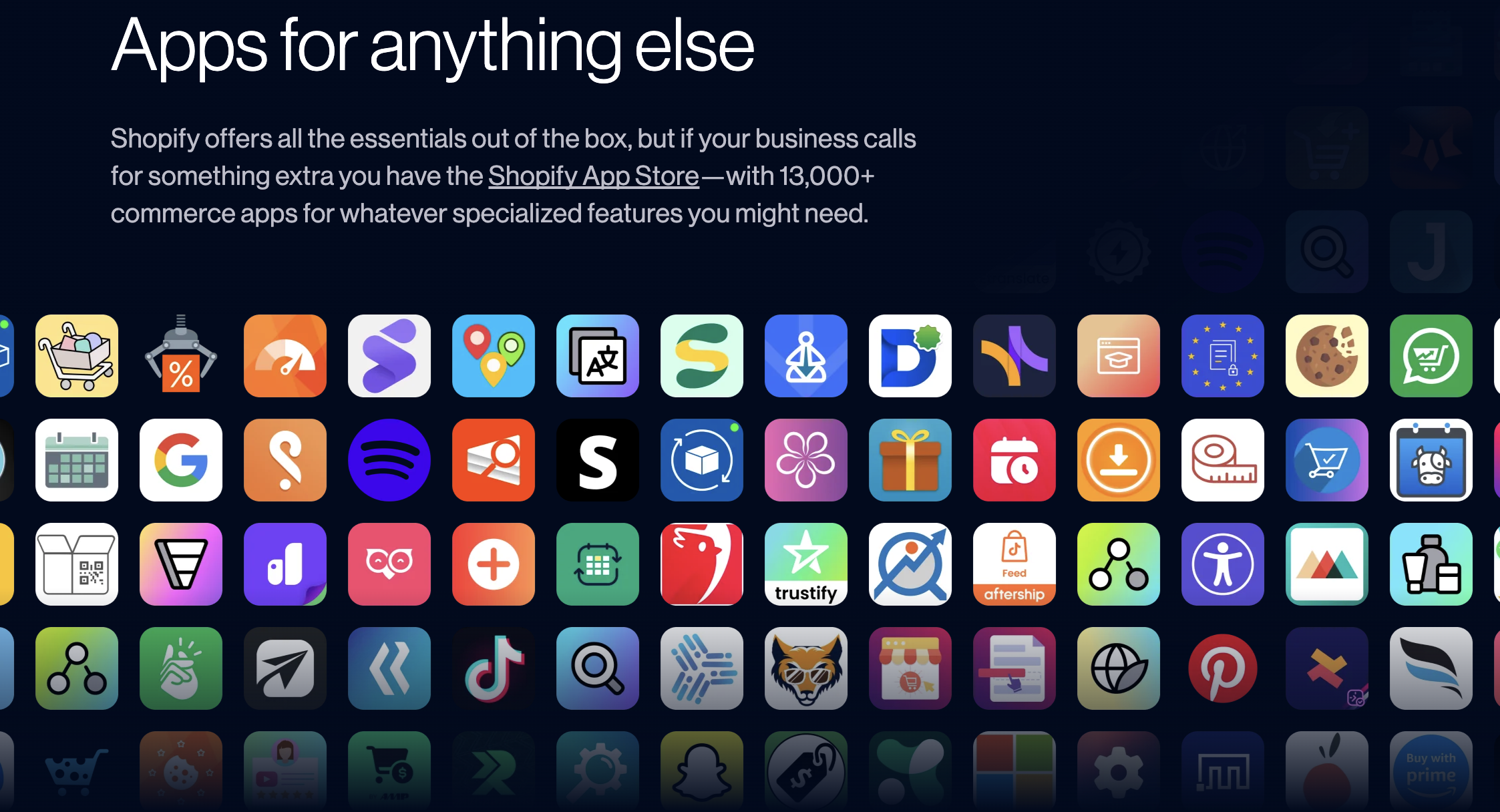
However, as your business grows, you might reach a point where “off-the-shelf” solutions start to feel like a cage. You’re paying for features you don’t use, struggling with “app bloat” or worse finding that no existing app can handle the unique way your business operates. In fact, you begin stacking apps to handle more complex needs. Workflows start to feel fragmented. Data lives in multiple systems. And suddenly, what once felt simple becomes a real challenge.
This leads to the critical question for scaling brands:
“Is it time to invest in custom Shopify app development, or is there still a “plug-and-play” solution that fits?”
In this article, we’ll break down when custom development makes sense.
The Case for Off-the-Shelf Apps: Why They Work
Before deciding to build, it is important to acknowledge why third-party apps are the backbone of the Shopify ecosystem. For early-stage businesses, they are invaluable.
1. Speed: Launch and Scale Quickly
Off-the-shelf apps are designed for immediate use. Installation typically takes minutes, not weeks.
This means you can:
- Add new features without development cycles
- Test ideas quickly (e.g., promotions, upsells, email flows)
- Respond faster to market changes
For fast-moving E-Commerce environments, speed is often more valuable than perfection.
2. Lower Upfront Cost
Unlike custom development, which requires significant initial investment, most apps operate on a subscription model.
- Monthly fees are predictable
- No need for large upfront budgets
- Lower financial risk when experimenting
This makes off-the-shelf apps especially attractive for startups and growing businesses.
3. Proven and Continuously Improved
Popular apps are used by thousands of merchants. That means:
- Features are tested across many real-world scenarios
- Bugs are identified and fixed quickly
- Updates are rolled out regularly
In many cases, app providers invest heavily in improving their products, something individual businesses would struggle to match on their own.
4. No Technical Maintenance Required
With off-the-shelf apps, the vendor handles:
- Hosting and infrastructure
- Security updates
- Compatibility with platform changes
This reduces the burden on your internal team and allows you to focus on operations and growth instead of technical upkeep.
5. Strong Ecosystem and Integrations
The Shopify App Store offers thousands of integrations covering:
- Marketing automation
- Payments
- Shipping and logistics
- Customer support
Many apps are built to work well together, or at least cover the most common integration needs without custom coding.
6. Ideal for Standardized Workflows
If your business processes are relatively straightforward such as:
- Basic inventory management
- Standard checkout flows
- Common marketing campaigns
So, off-the-shelf apps can handle these efficiently without unnecessary complexity.
In fact, off-the-shelf apps focus on solving the 80% of problems that most businesses share.
What Is Custom Shopify App Development?

Custom Shopify app development is exactly what it sounds like: building applications tailored to your business needs, rather than relying on generic tools from the Shopify App Store.
These apps are typically developed using Shopify’s APIs and can:
- Automate complex workflows
- Integrate Shopify with other systems (ERP, CRM, WMS)
- Create unique customer experiences
- Handle business logic that standard apps simply can’t support
Unlike off-the-shelf apps, custom apps are not built for mass business, it is technically built for your business based on your business context, requirements, needs and your growth visions.
When Do You Actually Need Custom Shopify App Development?
Custom Shopify app development plays a crucial role in removing the friction that holds back your unique business model. Here are the five key signs that you are ready for a bespoke solution.
1. Unique Business Logic
Most public apps are built for broad appeal. If your business involves non-standard workflows, such as complex B2B pricing tiers, custom rental models, or specialized inventory bundling that doesn’t fit standard catalog structures, off-the-shelf apps will often fall short. A custom app shapes the technology around your business, not the other way around.
2. The "App Bloat" Performance Tax
Every third-party app adds its own code to your storefront. This leads to “app bloat” where excess JavaScript and background API calls degrade your site’s speed. Because Core Web Vitals are a direct ranking factor, a slow site directly impacts your SEO and conversion rates.
A single, lightweight custom app can often consolidate the functions of 4 to 5 third-party apps, significantly boosting your store’s performance.
3. Data Silos and ERP/CRM Integration
Generic connectors can only go so far. If you need a deep, real-time sync between Shopify and a legacy ERP (like SAP, NetSuite, or Microsoft Dynamics), a proprietary Warehouse Management System (WMS), or a custom CRM, standard connectors often struggle with edge cases.
Custom middleware ensures that data flows exactly where it needs to go, in real-time, eliminating manual data entry.
4. Brand Control and "Headless" Aspirations
White-labeled apps often force a “preset” design onto your storefront, which can feel jarring to customers. Custom development allows you to create features like interactive product configurators, loyalty dashboards that feel like a native part of your brand identity.
For high-growth brands exploring “headless commerce,” custom apps are often required to bridge the gap between Shopify’s powerful backend and a bespoke frontend experience.
5. Future-Proofing and Ownership
Public apps are subject to the vendor’s roadmap and pricing whims. When a developer sunsets an app or triples their monthly subscription cost, you are forced to migrate under pressure. With a custom app, you own the codebase. You control the roadmap, and you aren’t dependent on a third-party developer’s business continuity.
Decision Matrix: Off-the-Shelf vs. Custom Development
| Factor | Off-the-Shelf App | Custom Development |
| Setup Time | Fast | Need a longer time |
| Initial Cost | Low (Subscription) | High (Upfront Investment) |
| Maintenance | Managed by vendor | Managed by you/agency |
| Scalability | Moderate | Highly scalable |
| Integration | Generic | Full ERP, CRM, & API |
| Performance | Potential Bloat | Optimized & Clean |
The 2026 Market Context: Why Custom Matters Now
In 2026, the competitive landscape has shifted. AI and hyper-personalization are the new standards. Enterprises are increasingly using Shopify functions and Checkout extensibility to create unique, app-like experiences that were previously impossible.
The smartest brands are architecting a proprietary commerce stack. By leveraging custom apps to automate merchandising, personalize discounting, and synchronize global supply chains, market leaders are achieving lower total cost of ownership (TCO) while significantly increasing their conversion rates.
Here’s where custom Shopify apps create real impact:
- ERP integration: Seamless synchronization between Shopify and ERP systems like Odoo for orders, inventory or financial data,..
- Advanced pricing engines: Custom rules for B2B pricing, tiered discounts or customer-specific pricing
- Smart fulfillment systems: Automatically route orders based on warehouse location, inventory levels and delivery timelines
- Subscription & membership models: Tailored recurring billing experiences beyond standard Shopify capabilities.
Partnering with Expertise Helps You Get It Right
Deciding to build a custom app is a significant strategic move, but its success depends on the partner you choose. At AHT Tech, we specialize in bridging the gap between ambitious e-commerce goals and technical execution.
Whether you are looking to integrate your Shopify store with a complex ERP, build a bespoke B2B portal, or optimize your store for record-breaking performance, our team provides:
- End-to-End Shopify Development Services: From consulting to deployment, we craft custom app development, support Shopify solutions which tailored to your business requirements
- Performance Engineering: We focus on clean, efficient code that keeps your storefront fast, even at high traffic volumes.
- Dedicated Ongoing Support: From discovery and scoping to post-launch maintenance, we ensure your custom assets evolve alongside your business.
- Deep Integration Expertise: With extensive experience in retail, wholesale, and enterprise-level e-commerce, we have helped brands drive significant growth through data-driven technical optimizations as well as connect Shopify with ERP systems, CRM platforms, or payment and logistics systems.
How to Decide: A Simple Framework
If you’re unsure whether to invest in custom Shopify app development, ask yourself:
- Are we relying on too many disconnected apps?
- Are integration gaps slowing us down?
- Are we spending heavily on subscriptions without real efficiency gains?
- Are our workflows too complex for standard tools?
If the answer is “yes” to multiple questions, custom development is worth exploring.
Conclusion
Make the Shift When You’re Ready!
If your Shopify setup feels like it needs constant manual adjustments, don’t look for another app to install. It’s time to build one that actually fits.
Are you unsure if your store is ready for a custom solution? Contact us to get consultation and audit your current tech stack – discover how custom development can streamline your operations and boost your conversion rates.
FAQs
When should I choose custom Shopify app development?
You should consider custom Shopify app development when your business starts outgrowing standard solutions such as needing unique workflows, deep system integrations (ERP, CRM, WMS), or when multiple apps create inefficiencies and performance issues. If your operations feel constrained by existing tools, it’s a strong signal to move toward a custom solution.
Are Shopify off-the-shelf apps enough for most businesses?
Yes, for many early-stage and mid-sized businesses, off-the-shelf apps are more than sufficient. They offer fast setup, lower upfront costs, and proven functionality. These apps are designed to solve the majority (around 80%) of common E-Commerce use cases effectively.
What are the biggest drawbacks of using too many Shopify apps?
Using too many apps can lead to “app bloat,” which affects site speed, increases costs, and creates fragmented workflows. It can also result in data silos, where information is not synchronized properly across systems, impacting operational efficiency and decision-making.
Can custom Shopify apps improve website performance?
Yes. A well-built custom app can consolidate the functionality of multiple third-party apps into a single, optimized solution. This reduces unnecessary scripts and API calls, leading to faster load times, better Core Web Vitals, and improved SEO performance.
Do I fully own a custom Shopify app once it’s built?
Yes. One of the key advantages of custom Shopify app development is ownership. You control the codebase, roadmap, and future enhancements. This reduces dependency on third-party vendors and protects your business from sudden pricing changes or discontinued services.