


Building Custom Software Development Solutions with Agentic AI

TABLE OF CONTENT
What Makes Agentic AI Different from a Traditional Chatbot?
Why Businesses Are Moving Beyond Basic AI Assistants
Market Data in 2026: Why Agentic AI Is Becoming a Business Priority
Real Market Case Study:
Where AI Agent Integration Creates the Most Business Value
Why Custom Software Development Matters For Agentic AI
A Practical Framework for Building Agentic AI into Custom Software Development
Key Risks Businesses Must Manage
Build vs. Buy: When Should Businesses Choose Custom AI Agents?
Conclusion
For the past few years, many businesses have treated AI as a chatbot layer: a tool that answers questions, drafts content, summarizes documents, or supports customer service. That was useful, but it was only the first stage of enterprise AI adoption.
Businesses are now moving beyond basic chatbots and embedding autonomous AI agents directly into their custom core workflows. These agents can analyze business context, interact with enterprise systems, trigger actions, coordinate with other agents, and complete multi-step processes with different levels of human approval. And this is where custom software development and Agentic AI start to converge.
Instead of buying a generic AI chatbot, companies are increasingly building tailored systems where AI agents are integrated into CRM, ERP, eCommerce, supply chain, customer support, finance, HR, and internal operations.
Gartner predicted that 40% of enterprise applications would include task-specific AI agents by 2026, up from less than 5% in 2025. It also projected that by 2028, 33% of enterprise software applications would include agentic AI, and at least 15% of day-to-day work decisions would be made autonomously through agentic AI.
The question is: “How can custom software development help us integrate AI agents into the workflows that matter most?”
What Makes Agentic AI Different from a Traditional Chatbot?
A traditional chatbot is usually reactive as A user asks a question, and the chatbot responds. It may retrieve information from a knowledge base, summarize a policy, or guide a customer through a simple support flow.
Agentic AI is different because it is designed to pursue a goal.
An AI agent can interpret a task, break it into steps, call tools, retrieve data, update systems, ask for approval, and continue the workflow until the desired outcome is reached. In a business context, this could mean resolving a customer case, generating a sales proposal, checking inventory availability, forecasting demand, flagging payment risks, or preparing a supplier negotiation brief.
The difference is not just intelligence. It is operational capability.
Instead of saying “Here is the information.” as a chatbot usually does, an AI agent says: “I checked the information, compared it with the policy, prepared the next action, and routed it for approval.” Therefore, custom software development is becoming more important.
Generic AI tools can assist individual users, but agentic systems need to understand the company’s workflow logic, permissions, data structure, exception rules, and business objectives.
McKinsey noted that realizing the full potential of agentic AI requires custom-built agents for high-impact processes such as end-to-end customer resolution, adaptive supply chain orchestration, and complex decision-making. These agents need to be deeply aligned with a company’s logic, data flows, and value creation levers.
Why Businesses Are Moving Beyond Basic AI Assistants
The first wave of generative AI adoption focused heavily on productivity. Employees used AI to write emails, summarize meetings, generate reports, draft marketing copy, or support coding tasks, but often at the individual level.
The next wave is focused on workflow-level transformation. According to OpenAI’s 2025 enterprise AI report, enterprise AI usage is accelerating and deepening as organizations incorporate AI into repeatable, multi-step workflows across functions and business units.
Deloitte’s 2026 State of AI in the Enterprise report also shows that worker access to AI rose by 50% in 2025, while expectations for scaled production use continue to increase. The number of companies with 40% or more AI projects in production is expected to double within six months, according to the report summary.
As a result, businesses are no longer satisfied with isolated AI experiments and they want AI systems that can be embedded into real business operations.
For example:
- In customer service, agents can classify tickets, retrieve account history, suggest resolutions, process refunds within policy limits, and escalate sensitive cases to humans.
- In sales, agents can qualify leads, enrich CRM records, recommend next-best actions, generate personalized proposals, and schedule follow-ups.
- In eCommerce, agents can personalize product discovery, check inventory, compare customer preferences, support checkout, and trigger retention campaigns.
- In supply chain, agents can monitor demand signals, supplier delays, stock levels, and logistics risks before recommending replenishment or rerouting actions.
- In finance, agents can detect invoice anomalies, match payments, prepare reports, and flag compliance risks for review.
The value does not come from the agent alone, it should come from connecting the agent with the systems where work actually happens.
Market Data in 2026: Why Agentic AI Is Becoming a Business Priority
The rise of agentic AI is supported by three market signals: enterprise adoption, software platform evolution, and pressure for measurable ROI.
First, enterprise AI adoption is expanding. McKinsey’s 2025 State of AI report found that AI use continues to spread across organizations, including growing proliferation of agentic AI, although many companies still struggle to move from pilots to scaled impact.
Second, enterprise software itself is changing. Gartner’s prediction that 40% of enterprise applications will feature task-specific AI agents by 2026 suggests that agents are becoming a native part of software architecture.
Third, companies are becoming more cautious about ROI. Gartner’s warning that over 40% of agentic AI projects could be canceled by 2027 shows that hype-driven projects will not survive. Businesses need clear use cases, strong governance, and measurable business outcomes.
Together, these signals point to one conclusion: agentic AI will matter, but only when it is built around real workflows and business value.
Real Market Case Study:
Bosch - Shopfloor Agent for Production Downtime Resolution

Bosch is a strong manufacturing case study for showing how custom software development and AI agent integration can improve factory operations.
In 2026, Bosch introduced its Shopfloor Agent, an agentic AI solution designed to help manufacturing teams identify and resolve machine downtime more quickly. According to Bosch, the Shopfloor Agent uses AI to support production workers by finding machine errors faster, helping employees troubleshoot issues even without deep technical expertise, and working across different languages.
Bosch highlights this as part of its broader Manufacturing Co-Intelligence approach, where specialized AI agents support people and existing production systems rather than replacing them. The Shopfloor Agent is designed around a real manufacturing workflow: machine downtime detection, troubleshooting, knowledge retrieval, and production support.
Zalando - AI Assistant for Fashion Discovery Across 25 Markets
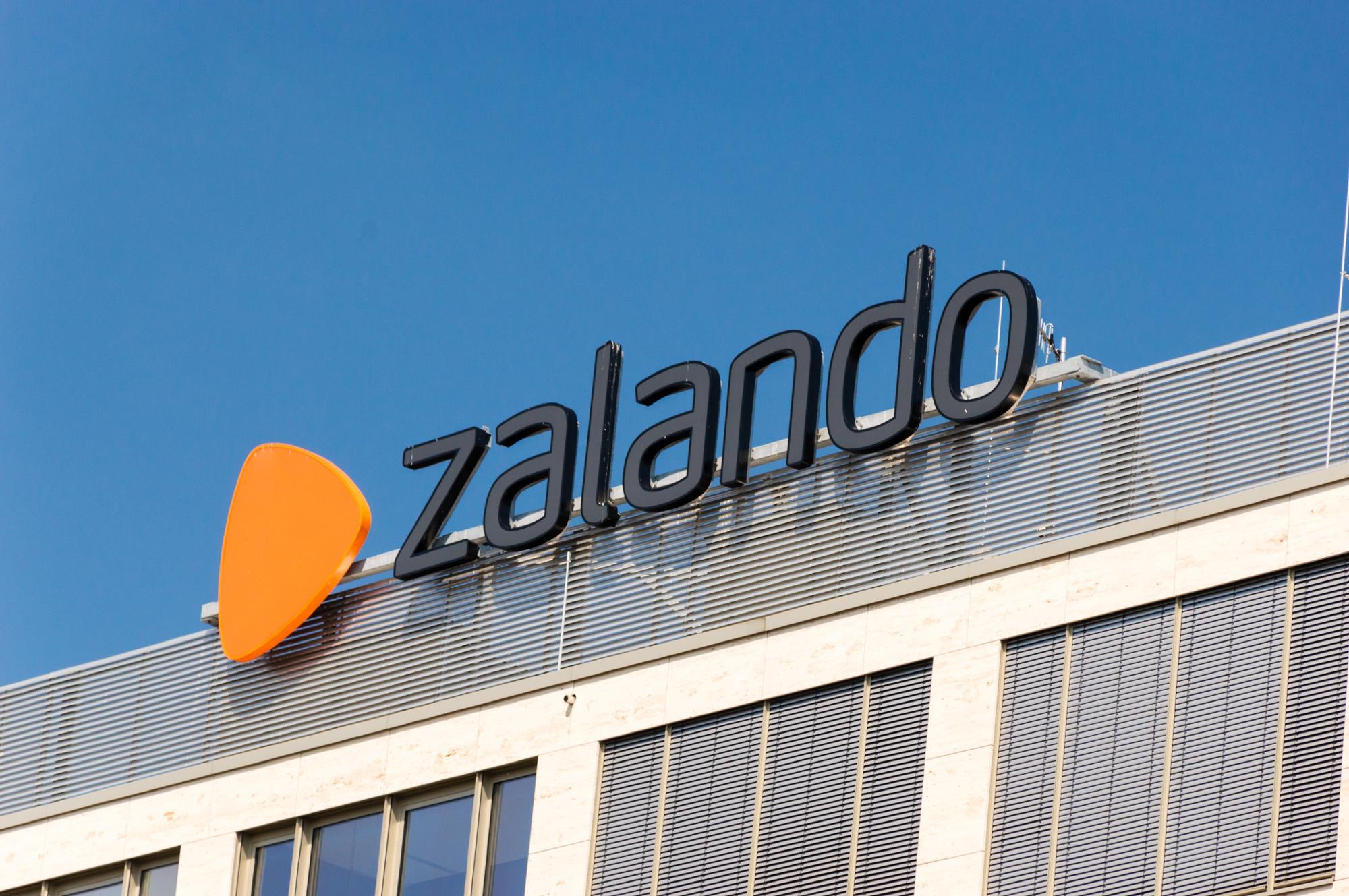
Zalando, the Berlin-based European fashion and lifestyle platform, is a strong EU example of how AI is moving from basic chatbot interaction into a more integrated shopping experience.
In 2024, Zalando expanded its AI-powered assistant across all 25 markets, supporting local languages and combining Zalando’s own models with OpenAI’s large language models. The assistant helps customers search and discover products in a more natural way, while also connecting to Zalando’s broader commerce experience, including trend discovery and personalized recommendations.
The assistant is built around a real eCommerce workflow: understanding customer intent, improving product discovery, supporting localization, and helping users navigate a large fashion catalog across multiple European markets.
For businesses investing in custom software development, Zalando shows why AI needs to be connected with product data, search logic, recommendation engines, customer behavior, localization, and digital commerce infrastructure. Without that level of integration, an AI assistant remains a surface-level feature. With proper AI agent integration, it can become part of the customer journey and conversion engine.
Agentic Commerce from Visa and Mastercard

Visa introduced Visa Intelligent Commerce to help AI agents transact securely on behalf of consumers and businesses. The company positions it as a way for AI partners to build agentic commerce experiences with tools, standards, APIs, and safeguards.
Mastercard has also described agentic commerce as AI-assisted shopping and payments, where agents can support product discovery, buying journeys, and transaction experiences.
For retailers and eCommerce businesses, this matters because the customer journey may no longer begin and end on a website or marketplace. AI agents may become intermediaries between customers and brands. They may compare products, check prices, validate reviews, apply preferences, and even complete purchases.
That means businesses will need software systems that can expose accurate product data, pricing, inventory, promotions, payment options, and customer policies to AI-driven interfaces.
This creates a new opportunity for custom software development solutions: building AI-ready commerce infrastructure that can serve both human customers and autonomous buying agents.
Where AI Agent Integration Creates the Most Business Value
The strongest use cases for AI agent integration usually share three characteristics: high process volume, clear decision rules, and measurable business impact.
1. Customer Service Resolution
Customer service is often the first area where businesses see tangible value. AI agents can handle repetitive requests such as order status, refund eligibility, account updates, appointment changes, delivery issues, and basic troubleshooting.
The goal is to reduce repetitive workload, improve response speed, and give human agents more context when escalation is needed.
2. Sales and CRM Automation
Sales teams often lose time on manual CRM updates, lead qualification, follow-up reminders, and proposal preparation. An AI agent connected to CRM, email, calendar, and customer data can help identify sales opportunities, recommend next steps, and prepare personalized outreach.
For B2B businesses, this can be especially useful because long sales cycles require consistent follow-up and contextual communication.
3. eCommerce and Retail Operations
In retail and eCommerce, agents can support product recommendation, customer segmentation, abandoned cart recovery, campaign personalization, demand forecasting, and return management.
For omnichannel businesses, custom AI agents can connect online behavior, offline purchase history, loyalty data, and inventory availability to create more relevant customer experiences.
4. Supply Chain and Inventory Management
Supply chain operations involve constant decision-making. AI agents can monitor supplier delays, inventory thresholds, sales velocity, warehouse capacity, and logistics disruptions.
Instead of waiting for a manager to manually detect a problem, an AI agent can surface risks early and recommend corrective actions.
5. Finance and Back-Office Workflows
Finance teams often deal with repetitive but accuracy-sensitive tasks: invoice matching, expense validation, payment follow-up, cash flow reporting, tax documentation, and anomaly detection.
AI agents can assist with these workflows, but governance is essential. For example, an agent may prepare payment recommendations, but final approval should remain with authorized finance personnel
Why Custom Software Development Matters For Agentic AI
Many businesses start with off-the-shelf AI tools because they are fast to test. But when AI needs to touch core operations, customization becomes essential.
A custom software development partner approach allows businesses to define:
- Which data the agent can access.
- Which systems the agent can update.
- Which decisions require approval.
- Which workflows should be fully automated.
- Which exceptions should be escalated.
- How agent actions should be logged and audited.
- How the system should handle errors, uncertainty, and compliance risk.
This level of control is difficult to achieve with a generic chatbot. Custom development also allows AI agents to work within the company’s real technology stack.
A Practical Framework for Building Agentic AI into Custom Software Development
Step 1: Identify High-Impact Workflows
Businesses should begin by mapping processes that are repetitive, data-heavy, time-consuming, or decision-intensive. Good starting points include customer support, order management, lead qualification, invoice processing, inventory monitoring, and internal reporting.
Step 2: Define the Agent’s Role
Not every agent needs to be fully autonomous. Some agents should only observe and summarize. Others can recommend actions. More advanced agents can execute tasks with approval. Only mature workflows should move toward full autonomy.
A useful model is Gartner’s staged governance approach: observe, advise, act with approval, and act autonomously. Each level requires different controls, monitoring, and accountability.
Step 3: Prepare Business Data
Before integration, businesses need to review data quality, system connectivity, permission structures, and process ownership.
Poor data creates poor decisions. If customer records, inventory data, pricing rules, or product information are inconsistent, the agent will amplify the problem.
Step 4: Integrate with Core Systems
The agent may need APIs, middleware, database access, authentication, role-based permissions, workflow triggers, and audit logs.
For example, a sales agent may need to read CRM data, draft an email, update opportunity status, and create a calendar reminder. A finance agent may need to match invoices against purchase orders but request approval before any payment action.
Step 5: Add Human-in-the-Loop Controls
For high-risk workflows, the agent should prepare recommendations and wait for approval. Over time, as performance improves and trust grows, businesses can increase the level of autonomy.
Step 6: Measure Business Outcomes
Agentic AI should be measured by business impact. Useful metrics include resolution time, manual hours saved, cost per transaction, conversion rate, forecast accuracy, customer satisfaction, error reduction, and revenue contribution.
Without clear metrics, agentic AI becomes another innovation experiment. With clear metrics, it becomes a business transformation tool.
Key Risks Businesses Must Manage
Security is one of the biggest concerns. AI agents may access enterprise systems, customer data, financial records, or operational tools. If permissions are too broad, the business increases the risk of unauthorized actions or data exposure.
Governance is another major risk. Gartner warned that many organizations may roll back autonomous AI agents if they fail to define appropriate access controls and oversight models.
There is also the risk of poor user adoption. McKinsey highlighted that agentic systems can impress in demos but frustrate real users if outputs are low quality, unreliable, or disconnected from how work is actually done.
To reduce these risks, businesses should avoid building agents as isolated experiments. They should design them as part of a broader operating model that includes business owners, IT teams, data governance, security, compliance, and end users.
Build vs. Buy: When Should Businesses Choose Custom AI Agents?
Off-the-shelf AI tools are useful when the workflow is simple, generic, and low-risk. For example, summarizing internal documents or drafting basic content may not require a custom system.
Custom AI agents make more sense when the workflow is strategic, data-sensitive, or deeply connected to business operations.
A company should consider custom software development when:
- The agent needs to connect with multiple internal systems.
- The workflow contains company-specific rules.
- The process directly affects revenue, cost, compliance, or customer experience.
- The business needs control over data access and permissions.
- The company wants AI capabilities that competitors cannot easily copy.
This is the real advantage of custom software development solutions. They allow AI to become part of the company’s operating system, not just another tool used on the side.
Conclusion
The real value comes when AI agents are integrated into core workflows, connected with enterprise systems, governed by clear rules, and measured against business outcomes. This is why AI agent integration and custom AI software development are becoming critical priorities for companies that want to move beyond experimentation.
For enterprises in retail, eCommerce, manufacturing, distribution, finance, and service industries, the opportunity is already here: start building AI as a workflow engine.
AHT Tech helps businesses move from AI experimentation to real workflow transformation through custom software development services. Instead of deploying standalone AI tools, we build practical solutions that connect AI agents with ERP, CRM, eCommerce platforms, internal applications, and business databases, enabling teams to automate repetitive tasks, improve decision-making, and streamline complex processes. Contact us and start custom software development that works beyond the chatbot layer.
FAQs
What is custom software development in Agentic AI?
Custom software development in Agentic AI means building tailored software solutions that integrate AI agents into a company’s real workflows, systems, and data instead of using generic chatbot tools.
How can AI agents improve business workflows?
AI agents can automate repetitive tasks, analyze data, trigger actions, support decision-making, and connect different systems such as ERP, CRM, eCommerce platforms, and internal applications.
Why do businesses need custom software development for AI agent integration?
Businesses need custom software development because AI agents must be designed around specific workflows, permission rules, data structures, security requirements, and business goals.
Which industries can benefit from Agentic AI solutions?
Industries such as retail, eCommerce, manufacturing, finance, logistics, and professional services can benefit from Agentic AI solutions by improving productivity, customer experience, and operational efficiency.
How can AHT Tech support custom AI software development?