




Why Mid-Sized Healthcare & EdTech Firms Need Managed IT Security for Compliance in 2026

TABLE OF CONTENT
The Compliance Challenge in 2026: Why It’s Getting Harder
What Is Managed IT Security & Compliance-as-a-Service?
Compliance-as-a-Service (CaaS): Turning Compliance into a Continuous Process
Key Benefits for Healthcare & EdTech Firms
Critical Compliance Requirements You Can’t Ignore
Real-World Use Cases
How to Get Started with Managed IT Security
Conclusion
In 2026, mid-sized Healthcare providers and EdTech companies are facing a perfect storm: rapidly evolving privacy regulations, increasingly sophisticated cyber threats, and growing pressure to protect sensitive data. Whether it’s patient health records or student data, the stakes have never been higher.
Yet many mid-sized organizations are stuck in a difficult position. They are too large to ignore compliance requirements, but often lack the internal resources to manage them effectively.
This is where managed IT security and Compliance-as-a-Service (CaaS) come into play, offering a scalable, cost-effective way to achieve HIPAA/GDPR compliance, strengthen healthcare data security, and meet modern EdTech privacy standards.
The Compliance Challenge in 2026: Why It’s Getting Harder
A Moving Target: Constantly Evolving Regulations
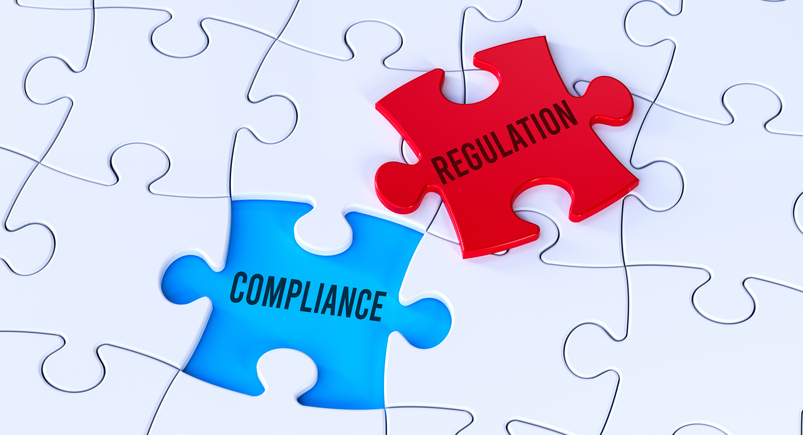
Regulations like HIPAA and GDPR are not static. They are continuously updated to address new technologies, cross-border data flows, and emerging risks.
For EdTech platforms operating globally, GDPR compliance alone can be overwhelming:
- Data residency requirements
- User consent management
- Right-to-be-forgotten requests
Healthcare providers, on the other hand, must ensure strict control over patient data access, storage, and sharing under increasing scrutiny.
Cyber Threats Are More Advanced Than Ever
Cyber threats in 2026 are data-driven, automated, and highly targeted. Attackers now leverage AI, large-scale data leaks, and sophisticated social engineering to penetrate systems faster and with greater precision.
For mid-sized healthcare and EdTech firms, the situation is even more critical. These organizations hold high-value sensitive data but often lack the layered defenses of large enterprises, making them one of the fastest-growing targets for cybercriminals.
Recent global cybersecurity reports highlight a sharp escalation in both the frequency and impact of cyberattacks:
- According to IBM Security’s Cost of a Data Breach Report, the global average cost of a data breach exceeded $4.4 million, with healthcare reaching over $10 million per breach, the highest among all industries.
- ENISA reports that ransomware, data theft, and denial-of-service attacks remain the top 3 threats across Europe, particularly affecting sectors handling regulated data.
Cyber risk is statistically inevitable without proper defenses.
Mid-sized firms offer the same data value as enterprises but with significantly weaker protection layers.
Mid-sized organizations sit in a vulnerable middle ground:
- They store large volumes of regulated data (patient records, student information)
- They rely on complex digital ecosystems (cloud platforms, APIs, SaaS tools)
- They lack enterprise-grade cybersecurity infrastructure
Attackers recognize this imbalance and deliberately target it.
Limited Internal Resources: The Hidden Risk Multiplier
While threats are becoming more sophisticated, most mid-sized firms are not scaling their defenses at the same rate.
This creates a dangerous imbalance.
Most organizations is lacking a dedicated cybersecurity team, in-house compliance experts implementing HIPAA/GDPR compliance and 24/7 monitoring capabilities because cyberattacks can occur at any time, not just during business hours
According to the ISC, the global cybersecurity workforce gap exceeds 3 million professionals. This shortage directly impacts mid-sized firms, which:
- Struggle to hire experienced security talent
- Cannot compete with enterprise-level salaries
- Rely on under-resourced internal teams
What Is Managed IT Security & Compliance-as-a-Service?
As cyber threats become more complex and regulatory requirements more demanding, organizations can no longer rely on fragmented tools or periodic audits. Instead, they need continuous protection, real-time visibility, and always-on compliance.
This is where Managed IT Security and Compliance-as-a-Service (CaaS) come in, two interconnected models that are redefining how mid-sized healthcare and EdTech firms approach HIPAA/GDPR compliance, IT security, and data protection in 2026.
Managed IT Security: From Reactive Defense to Proactive Protection
Managed IT Security is the practice of outsourcing cybersecurity operations to a specialized provider that delivers 24/7 monitoring, threat detection, and incident response.
Instead of reacting to breaches after they occur, organizations gain a proactive, intelligence-driven defense system.
A modern managed IT security framework typically covers:
- Security Operations Center (SOC) services: Continuous monitoring of systems, networks, and endpoints
- Threat detection & response (MDR/XDR): Identifying and neutralizing threats in real time
- Endpoint & network protection: Securing devices, servers, and cloud environments
- Vulnerability management: Identifying and fixing security weaknesses before attackers exploit them
- Identity & access management (IAM): Controlling who can access what data and systems
According to Gartner, by 2026, over 60% of mid-sized enterprises will rely on managed security services due to increasing cyber risks and talent shortages. This demonstrates that speed and visibility are critical and difficult to achieve without external expertise.
Why Managed IT Security Matters for Healthcare & EdTech
These industries deal with highly sensitive, regulated data, making them prime targets for cyberattacks. Managed IT security ensures:
- Continuous protection of healthcare data security systems
- Secure infrastructure for EdTech platforms handling global users
- Reduced risk of compliance violations
Compliance-as-a-Service (CaaS): Turning Compliance into a Continuous Process
Traditional compliance models are outdated. Most organizations still approach compliance as:
- A one-time audit
- A checklist exercise
- A reactive response to regulatory pressure
What is CaaS?
Compliance-as-a-Service (CaaS) is a cloud-based model that provides:
- Automated compliance monitoring
- Real-time regulatory alignment
- Continuous audit readiness
Instead of preparing for audits once a year, organizations remain compliant every day. A robust CaaS solution typically includes:
- Automated policy enforcement: Ensuring systems follow regulatory requirements
- Continuous risk assessment: Identifying compliance gaps in real time
- Audit trail and reporting: Generating documentation required for HIPAA/GDPR audits
- Regulatory updates integration: Adapting to evolving laws without manual intervention
Why Security and Compliance Must Work Together
Many organizations mistakenly treat security and compliance as separate functions. In reality, they are deeply interconnected.
- Security without compliance → Systems may be protected but still violate regulations
- Compliance without security → Policies exist, but systems remain vulnerable
This disconnect creates:
- Regulatory exposure
- Security blind spots
- Inefficient operations
The Integrated Model: Security + Compliance
Managed IT Security + CaaS creates a unified system where:
- Security controls are aligned with regulatory requirements
- Compliance is enforced through technical safeguards
- Monitoring and reporting are automated
Example: HIPAA/GDPR Compliance in Practice
With an integrated approach:
- Access control policies enforce data privacy rules
- Encryption ensures secure data storage and transfer
- Monitoring systems track all user activity for audit logs
- Alerts notify teams of potential compliance violations in real time
Key Benefits for Healthcare & EdTech Firms
In 2026, the value of managed IT security and CaaS goes far beyond basic protection. For healthcare providers and EdTech companies, these solutions directly impact regulatory compliance, operational efficiency, scalability, and customer trust.
What makes this especially critical is the real-time nature of modern risks. Cyber threats, compliance requirements, and user expectations are evolving continuously, meaning static security models are no longer sufficient.
Below is a deeper, data-driven look at the key benefits.
1. Simplified HIPAA/GDPR Compliance
Instead of juggling complex regulatory requirements manually, automation simplifies the process.
Your business will gain:
- Real-time compliance monitoring
- Automated documentation
- Faster audit preparation
2. Stronger Healthcare Data Security
Healthcare data is one of the most sensitive types of information.

Managed IT security ensures:
- End-to-end encryption
- Role-based access control
- Secure data storage and transfer
3. Protection of Student & User Data in EdTech
EdTech platforms handle vast amounts of personal data, from student profiles to learning analytics.

With managed security:
- Platforms comply with EdTech privacy standards
- APIs and integrations are secured
- User trust is strengthened
4. Cost Efficiency Without Compromise
Building an in-house security team is expensive and time-consuming.
Managed services offer:
- Predictable monthly costs
- Access to expert teams
- No need for heavy infrastructure investment
5. Faster Incident Response
Time is critical during a cyberattack.
With 24/7 monitoring:
- Threats are detected instantly
- Incidents are contained quickly
- Damage is minimized
Critical Compliance Requirements You Can’t Ignore
HIPAA Essentials (Healthcare)
To meet HIPAA standards, organizations must ensure:
- Confidentiality of patient data
- Secure access control
- Audit logs for all activities
- Data integrity and backup systems
GDPR Essentials (Global & EdTech)
GDPR requires organizations to:
- Obtain clear user consent
- Allow data access and deletion requests
- Report breaches within strict timelines
- Ensure lawful data processing
Common Compliance Gaps in Mid-Sized Firms
Many organizations unknowingly fall short due to:
- ❌ Incomplete documentation
- ❌ Weak access control policies
- ❌ Lack of continuous monitoring
- ❌ Outdated security systems
These gaps significantly increase the risk of non-compliance.
Why Mid-Sized Companies Are the Most Vulnerable
Mid-sized firms sit in a dangerous middle ground.
They are:
- Large enough to handle sensitive data
- Visible enough to be targeted
- Under-resourced compared to enterprises
This makes them ideal targets for cybercriminals and prime candidates for regulatory penalties. Compliance is building trust and a competitive advantage.
Real-World Use Cases
Healthcare Provider: From Risk to Resilience
Before:
- Manual compliance processes
- High audit risk
- Limited visibility
After implementing managed IT security:
- Automated compliance workflows
- Secure patient data management
- Full audit readiness
EdTech Platform: Scaling Securely Across Borders
Before:
- GDPR compliance challenges
- Data privacy concerns
After:
- Centralized compliance management
- Secure, scalable infrastructure
- Improved user trust
How to Get Started with Managed IT Security
Adopting managed IT security services should not start with buying tools. It should start with understanding your current risk exposure, compliance obligations, data environment, and business goals.
For mid-sized healthcare and EdTech firms, the goal is not only to “improve cybersecurity.” The real goal is to build a security model that supports HIPAA/GDPR compliance, healthcare data security, EdTech privacy standards, business continuity, and scalable growth.
Below is a practical step-by-step approach.
Step 1: Assess your current security & compliance status
The first step is to understand where your organization stands today.
Many mid-sized firms believe they are “mostly compliant” because they already have firewalls, passwords, cloud backups, or basic antivirus tools. However, compliance with HIPAA, GDPR, and industry-specific privacy standards requires much more than basic IT protection.
A proper assessment should review:
- Existing IT infrastructure
- Cloud environments
- Internal applications
- Third-party platforms
- Data storage systems
- User access permissions
- Incident response procedures
- Current compliance documentation
For healthcare firms, this means identifying where protected health information is stored, processed, accessed, and transmitted.
For EdTech firms, this means mapping student data, parent data, teacher data, payment data, learning analytics, and user behavior data across the entire platform.
Step 2: Map Sensitive Data Across the Organization
Before you can protect data, you need to know where it lives. Data mapping is especially important for HIPAA/GDPR compliance because both regulations require organizations to understand how sensitive information is collected, processed, stored, shared, and deleted.
This step should answer key questions such as:
- What types of sensitive data do we collect?
- Where is this data stored?
- Who has access to it?
- Is the data encrypted?
- Is it shared with third-party vendors?
- Is it transferred across borders?
- How long is the data retained?
- How can users request access, correction, or deletion?
For healthcare organizations, the focus is usually on patient records, appointment data, insurance information, diagnostic reports, medical history, and billing details.
For EdTech companies, the focus is often on student profiles, learning records, assessment results, behavioral analytics, login credentials, communication records, and payment data.
Step 3: Identify Regulatory Requirements & Compliance Gaps
Once your data is mapped, the next step is to compare your current practices against relevant regulations.
For many mid-sized healthcare and EdTech companies, this may include:
- HIPAA
- GDPR
- Local data protection laws
- Education privacy standards
- Internal security policies
- Contractual requirements from enterprise clients or institutions
A compliance gap analysis helps identify what is missing, outdated, or improperly implemented.
Common gaps include:
- Weak password and authentication policies
- Lack of multi-factor authentication
- No clear incident response plan
- Missing audit logs
- Incomplete consent management
- Poor third-party vendor review
- Unclear data retention policies
- Insufficient employee security training
This stage should result in a clear compliance roadmap with prioritized actions.
Not every issue carries the same level of risk. For example, unencrypted patient records or exposed student data should be treated as urgent, while outdated internal policy documents may be scheduled as part of a longer-term remediation plan.
Step 4: Define Security Priorities Based on Business Risk
Your organization should prioritize security improvements based on actual business impact.
For example, a healthcare provider should prioritize systems that affect patient safety, patient records, appointment scheduling, billing, and clinical operations. An EdTech platform should prioritize user authentication, cloud infrastructure, APIs, learning management systems, payment systems, and data-sharing integrations.
A practical risk-based priority list may look like this:
- Critical systems that must stay online
- Sensitive data that must be protected
- Compliance gaps that could trigger penalties
- Vulnerabilities that attackers could exploit quickly
- Manual processes that create high error risk
- Vendors with access to regulated data
This helps prevent wasted spending and ensures that your managed IT security service focuses on the areas that matter most.
Step 5: Choose the Right Managed IT Security Partner
Selecting the right provider is one of the most important decisions in the process because a good managed IT security partner should not only provide tools. They should understand your industry, compliance obligations, operational workflows, and long-term business goals.
When evaluating a provider, look for:
- Experience with HIPAA/GDPR compliance
- Knowledge of healthcare and EdTech data environments
- 24/7 monitoring capabilities
- Incident response expertise
- Compliance reporting and auditing support
- Cloud security expertise
- Ability to scale with your business
- Clear communication and service-level agreements
For mid-sized firms, the right partner should act as an extension of the internal IT team. They should help you move from reactive troubleshooting to proactive security management.
Step 6: Design a Managed Security Roadmap
This roadmap should translate the findings from the assessment and gap analysis into a practical implementation plan.
A typical roadmap may include:
- Phase 1: Stabilize – Focus on urgent risks and quick wins.
- Phase 2: Strengthen – Build stronger protection across systems.
- Phase 3: Optimize – Move toward continuous improvement.
A roadmap keeps the project realistic, measurable, and aligned with business priorities.
Step 7: Implement Core Security Controls
Once the roadmap is approved, the organization should implement the core security controls needed for protection and compliance.
For healthcare organizations, these controls help protect patient data and reduce HIPAA-related risks. For EdTech companies, they help secure user accounts, learning platforms, payment data, and third-party integrations.
This stage is where managed IT security becomes operational.
Step 8: Set Up 24/7 Monitoring & Threat Detection
Continuous monitoring is one of the most valuable parts of managed IT security.
A managed security provider can monitor systems around the clock for:
- Suspicious login attempts
- Unauthorized access
- Malware activity
- Data exfiltration attempts
- Unusual user behavior
- Vulnerability exploitation
- Cloud misconfigurations
- Endpoint compromise
With real-time alerts and response workflows, threats can be detected and contained before they become major breaches.
For regulated industries, 24/7 monitoring also supports audit readiness by creating detailed logs and evidence of security activity.
Step 9: Build Compliance Reporting & Audit Readiness
Security controls are important, but compliance also requires evidence. Organizations must be able to prove that they are protecting data properly.
A managed IT security provider can help build:
- Automated audit reports
- Access logs
- Security incident records
- Risk assessment documentation
- Policy documentation
- Vendor compliance records
- Data protection evidence
- Remediation tracking
Instead of preparing for audits at the last minute, companies can maintain continuous audit readiness.
Step 10: Train Employees & Reduce Human Risk
Employees remain one of the most common entry points for phishing, credential theft, and accidental data exposure. A complete managed IT security program should include ongoing employee awareness training.
The goal is to turn employees from a security weakness into a first line of defense.
Step 11: Test, Review & Improve Continuously
Managed IT security should be continuously tested, reviewed, and improved.
Regular activities may include:
- Vulnerability assessments
- Penetration testing
- Compliance audits
- Incident response simulations
- Backup recovery testing
- Access permission reviews
- Vendor security reviews
- Policy updates
This continuous improvement approach helps organizations stay aligned with changing regulations, evolving cyber threats, and business growth.
Conclusion
Future-Proof Your Compliance Strategy
In 2026, compliance is foundational to business success. Mid-sized healthcare and EdTech firms must move beyond reactive compliance and adopt a proactive, integrated approach.
Managed IT security combined with Compliance-as-a-Service offers:
- Continuous protection
- Simplified compliance
- Long-term scalability
AHT Tech stands as a global trusted partner, helping organizations navigate complex regulations while securing their most valuable asset. What AHT Tech offers IT security services that could protect your digital assets with industry-best practices and global delivery teams:
- Security training & phishing simulations
- Vulnerability assessments & pen tests
- Managed SIEM & 24/7 monitoring
- Incident response and forensics
- Cloud & network security
Ready to simplify compliance and secure your business? Contact us to discuss further!
FAQs
What is the difference between Managed IT Security and Compliance-as-a-Service?
Managed IT security protects systems and data, while CaaS ensures you meet HIPAA/GDPR compliance. Both work together for full protection and compliance.
Why do mid-sized firms struggle with compliance?
They often lack security experts, monitoring tools, and resources to handle complex regulations and data systems.
How does managed IT security improve healthcare data security?
It uses encryption, access control, and 24/7 monitoring to protect patient data and meet HIPAA requirements.
What are the biggest cybersecurity risks for EdTech?
Data breaches, phishing, insecure APIs, and cloud misconfigurations affecting student data.
How long does implementation take?
Basic setup: 2–4 weeks.
Full deployment: 1–3 months.
Optimization: ongoing.