


LATEST INSIGHTS
Check out our latest Technology Insights
18 Sep, 2026
Generic software can launch quickly, but it often forces growing companies to redesign valuable workflows around a vendor’s product. As integrations multiply and AI enters core operations, those compromises create manual work, fragmented data, and rising subscription costs. Therefore, this article explains how custom software development works, when companies should build instead of buy, what projects cost in 2026, and how current technology trends affect partner selection.
Key Takeaways
Custom software development creates an application around one organization’s workflows, data, users, and technical environment. Companies should build when unique processes, proprietary logic, complex integrations, or regulatory controls create strategic value that packaged software cannot deliver. Conversely, companies should buy when the requirement is standard, urgent, and a proven product already serves it well.
- Best reason to build: The software supports a differentiating process that directly affects revenue, cost, risk, or customer experience.
- Best reason to buy: A commercial product already covers the requirement with acceptable integration, governance, and long-term pricing.
- 2026 market shift: AI-assisted engineering, cloud-native architecture, platform engineering, and security-by-design are changing how teams scope and deliver custom applications.
15 Sep, 2026
As a platform grows, development speed increasingly depends on how easily frontend teams, backend engineers, integrations, mobile applications, external partners, and new product features can evolve without waiting for one another.
In tightly coupled architectures, even a seemingly small feature can create dependencies across the database, business logic, user interface, and third-party integrations. One backend change may require frontend updates, regression testing, integration adjustments, and another coordinated deployment before the feature reaches users.
An API-first approach changes the development model by defining how software components communicate before teams implement the underlying application logic. Instead of treating APIs as connectors added after a product is built, teams design them as stable interfaces around business capabilities from the beginning.
This model is becoming increasingly mainstream. Postman’s 2025 State of the API Report, based on responses from more than 5,700 developers, architects, and executives, found that 82% of organizations had adopted API-first practices to some degree, while 25% described themselves as fully API-first. The share of fully API-first organizations increased 12% year over year.
For SaaS companies, however, the value of API-first development is not simply “having more APIs.” Its real advantage is creating clear boundaries that allow teams, interfaces, integrations, and increasingly AI systems to evolve without requiring the entire product to change together.
04 Sep, 2026
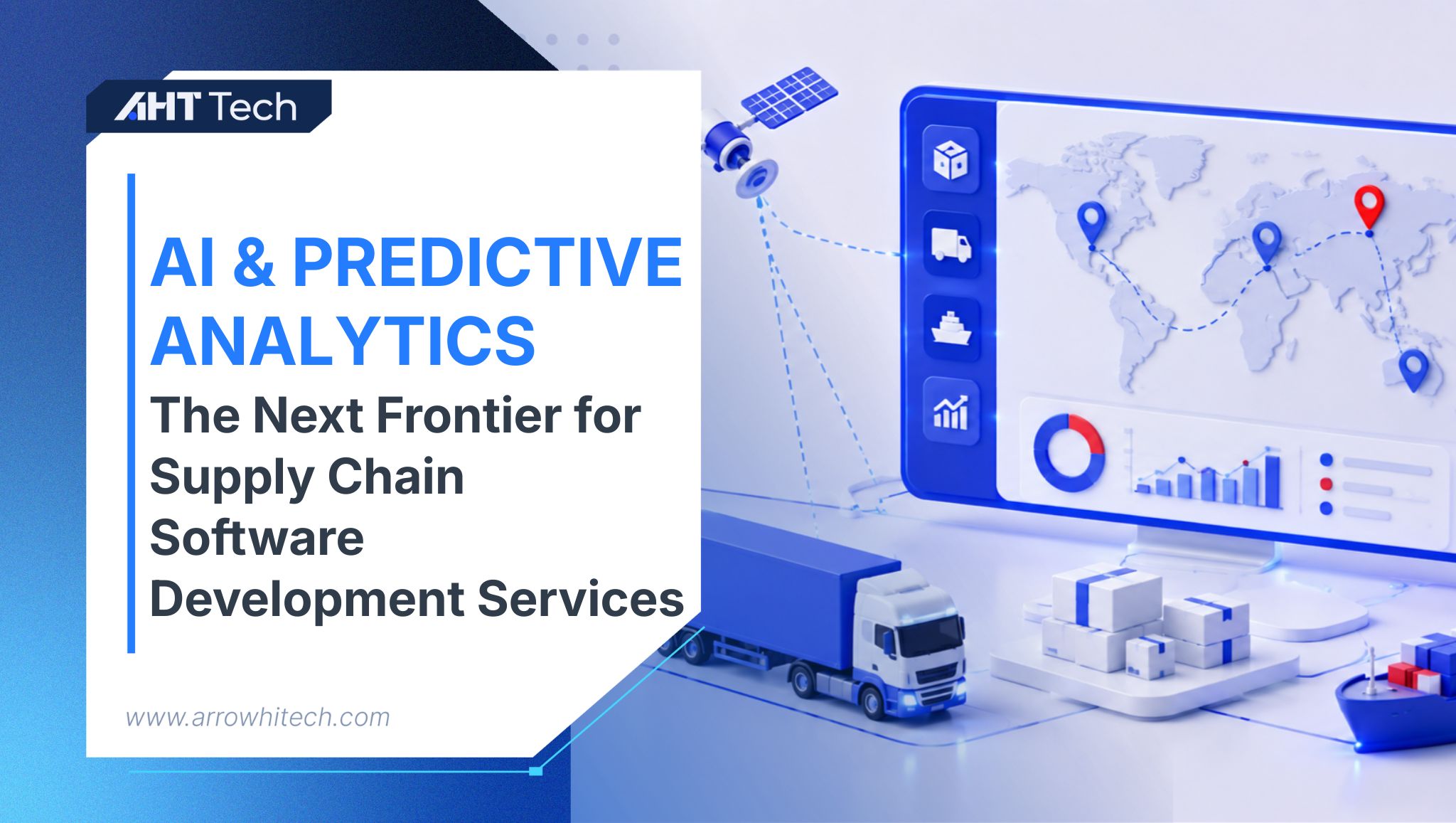
Supply chains are becoming too complex, volatile, and interconnected for traditional software to manage through historical reporting alone. Businesses now need systems capable of anticipating demand, identifying risks, recommending actions, and increasingly executing decisions automatically. This shift is redefining supply chain software development services, moving them beyond workflow digitization toward AI-powered decision intelligence.
From demand sensing and inventory optimization to disruption management and intelligent logistics, artificial intelligence and predictive analytics are quickly becoming part of the core architecture of modern supply chain platforms.
And from 2026 onward, this transition is expected to accelerate significantly.
25 Aug, 2026
The wrong app development company rarely looks like a bad choice on the first sales call, but missed sprints and expanding scope can quickly put your product launch at risk. Furthermore, Australian projects often require specific expertise in compliance, accessibility, payments, and regulated digital services that generalist vendors may not offer. This article compares five leading app development company in Australia using verified project outcomes, pricing benchmarks, sector strengths, and delivery trade-offs. As a result, you can select a partner that fits your product, budget, and compliance requirements before signing a contract.
Key Takeaways
- Market size: Australia’s app development market is projected to reach $2.81 billion by 2033 (Source: Statista/Grand View Research, 2025), driven by fintech, health tech, government digital transformation, and retail automation.
- Cost range: Senior developer rates run $95 to $250 AUD per hour depending on the city; offshore hybrid models typically reduce that by 40% to 60%.
- Compliance first: Any vendor without live production deployments under your specific regulatory framework carries delivery risk that won’t surface until the project is already underway.
- Real benchmark: Code Heroes built the Queensland Digital Licence – Australia’s first ISO 18013-5 government digital credential – which reached 500,000 active users in seven months with a 94% satisfaction rating.
Explore More
- Industry
- Healthcare
- Manufacturing
- Wholesale & Distribution
- Logistics & Supplychain
- Education & EdTech
- BFSI & Fintech
- Retail & e-Commerce
- Startup
- Expertise
- Tibco
- Microservices
- Angular
- Odoo
- SQL
- Acumatica
- Salesforce Sales Cloud Pardot
- Liferay
- Flutter
- Salesforce
- Java Spring Boot
- Magento
- Shopify
- Bigcommece
- Tableau
- Databricks
- Others
- BPM
- Java
- Oracle
- Platform
- Website Development
- Mobile App development
- ERP
- Ecommerce
- CMS
- Managed Service
- SaaS
- Design
- Data Science
- AI/IoT
- Others
- ESB Development
- CX Consulting & Development
18 Sep, 2026
Generic software can launch quickly, but it often forces growing companies to redesign valuable workflows around a vendor’s product. As integrations multiply and AI enters core operations, those compromises create manual work, fragmented data, and rising subscription costs. Therefore, this article explains how custom software development works, when companies should build instead of buy, what projects cost in 2026, and how current technology trends affect partner selection. Key Takeaways Custom software development creates an application around one organization’s workflows, data, users, and technical environment. Companies should build when unique processes, proprietary logic, complex integrations, or regulatory controls create strategic value that packaged software cannot deliver. Conversely, companies should buy when the requirement is standard, urgent, and a proven product already serves it well. Best reason to build: The software supports a differentiating process that directly affects revenue, cost, risk, or customer experience. Best reason to buy: A commercial product already covers the requirement with acceptable integration, governance, and long-term pricing. 2026 market shift: AI-assisted engineering, cloud-native architecture, platform engineering, and security-by-design are changing how teams scope and deliver custom applications.
15 Sep, 2026
As a platform grows, development speed increasingly depends on how easily frontend teams, backend engineers, integrations, mobile applications, external partners, and new product features can evolve without waiting for one another. In tightly coupled architectures, even a seemingly small feature can create dependencies across the database, business logic, user interface, and third-party integrations. One backend change may require frontend updates, regression testing, integration adjustments, and another coordinated deployment before the feature reaches users. An API-first approach changes the development model by defining how software components communicate before teams implement the underlying application logic. Instead of treating APIs as connectors added after a product is built, teams design them as stable interfaces around business capabilities from the beginning. This model is becoming increasingly mainstream. Postman’s 2025 State of the API Report, based on responses from more than 5,700 developers, architects, and executives, found that 82% of organizations had adopted API-first practices to some degree, while 25% described themselves as fully API-first. The share of fully API-first organizations increased 12% year over year. For SaaS companies, however, the value of API-first development is not simply “having more APIs.” Its real advantage is creating clear boundaries that allow teams, interfaces, integrations, and increasingly AI systems to evolve without requiring the entire product to change together.
04 Sep, 2026
Supply chains are becoming too complex, volatile, and interconnected for traditional software to manage through historical reporting alone. Businesses now need systems capable of anticipating demand, identifying risks, recommending actions, and increasingly executing decisions automatically. This shift is redefining supply chain software development services, moving them beyond workflow digitization toward AI-powered decision intelligence. From demand sensing and inventory optimization to disruption management and intelligent logistics, artificial intelligence and predictive analytics are quickly becoming part of the core architecture of modern supply chain platforms. And from 2026 onward, this transition is expected to accelerate significantly.
25 Aug, 2026
The wrong app development company rarely looks like a bad choice on the first sales call, but missed sprints and expanding scope can quickly put your product launch at risk. Furthermore, Australian projects often require specific expertise in compliance, accessibility, payments, and regulated digital services that generalist vendors may not offer. This article compares five leading app development company in Australia using verified project outcomes, pricing benchmarks, sector strengths, and delivery trade-offs. As a result, you can select a partner that fits your product, budget, and compliance requirements before signing a contract. Key Takeaways Market size: Australia’s app development market is projected to reach $2.81 billion by 2033 (Source: Statista/Grand View Research, 2025), driven by fintech, health tech, government digital transformation, and retail automation. Cost range: Senior developer rates run $95 to $250 AUD per hour depending on the city; offshore hybrid models typically reduce that by 40% to 60%. Compliance first: Any vendor without live production deployments under your specific regulatory framework carries delivery risk that won’t surface until the project is already underway. Real benchmark: Code Heroes built the Queensland Digital Licence – Australia’s first ISO 18013-5 government digital credential – which reached 500,000 active users in seven months with a 94% satisfaction rating.
21 Aug, 2026
Germany offers hundreds of app development vendors, yet a strong portfolio does not guarantee that a team can handle GDPR architecture or regulated enterprise requirements. Moreover, overlooked work such as consent management, audit logging, and right-to-erasure workflows can increase both engineering time and project cost after the contract is signed. This article compares 5 leading app development companies in Germany across pricing, technical expertise, compliance depth, and sector experience. Therefore, you can build a shortlist based on delivery evidence rather than polished sales proposals. Key Takeaways Germany’s mobile app market reached €12.65 billion in 2024 and is growing toward €49.6 billion by 2035 (Statista), making it Europe’s largest app market by revenue. GDPR-compliant architecture adds measurable engineering time: consent management UX (3-5 days), audit trail schema (2-3 days), right-to-erasure API per integration (1-2 days each). German agencies charge €70-€200/hr. Verified offshore partners offer comparable delivery at $25-$70/hr, cutting total project cost by 40-60%. Clutch scores confirm client satisfaction but don’t reveal compliance depth. Always verify with a named reference call in your specific industry. Offshore partners like AHT Tech are increasingly used alongside German agencies for cost-efficiency, provided they demonstrate GDPR-aware architecture and ISO-certified QA.
14 Aug, 2026
Cloud adoption is no longer simply about moving workloads away from on-premise infrastructure. For many businesses, the bigger question is how to build a cloud environment that can continue scaling as application demand, data volumes, AI workloads, geographic reach, and operational requirements grow. A single-cloud strategy allows organizations to concentrate their applications and infrastructure within one cloud ecosystem, potentially simplifying management, security, skills development, and cost control. Multi-cloud, on the other hand, enables businesses to use cloud services from multiple providers, potentially increasing workload flexibility, geographic coverage, technology choice, and resilience. But using more cloud providers does not automatically create a more scalable environment. The better question is: Which cloud strategy enables the business to scale performance, operations, security, and cost without introducing unnecessary complexity? Flexera’s 2026 State of the Cloud Report found that 73% of surveyed organizations now operate hybrid cloud estates, while estimated wasted cloud spend has risen to 29%. These numbers indicate that enterprises are expanding their cloud footprints, but many are also struggling to manage the financial and operational consequences of that expansion. This article compares multi-cloud vs single-cloud strategies from a scalability perspective and explores how businesses can determine which approach is better suited to their long-term cloud requirements.
30 Jul, 2026
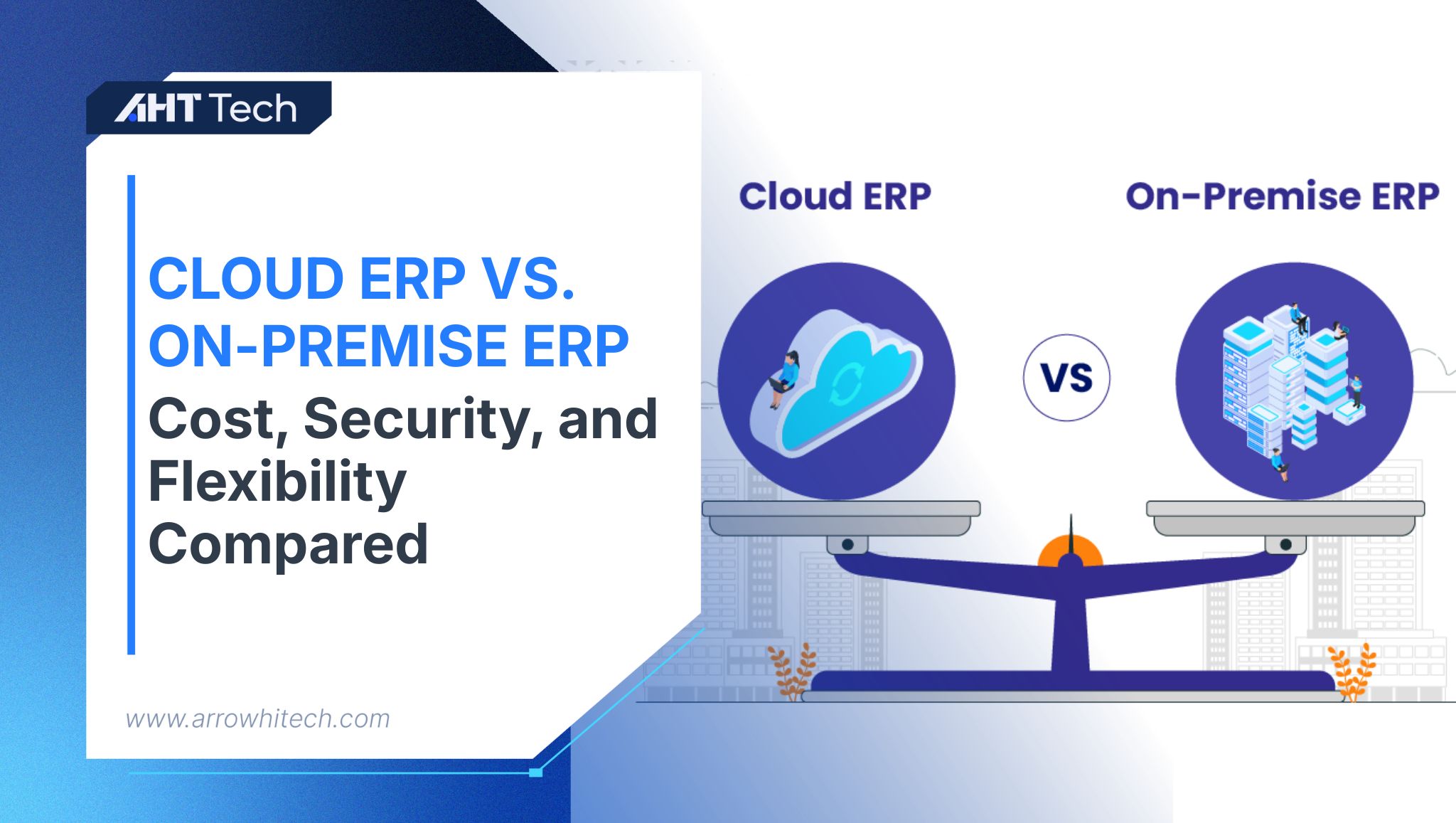
Choosing an enterprise resource planning (ERP) system involves more than comparing software features. Businesses must also decide where the ERP platform will be hosted, how it will be maintained, and who will be responsible for its security, performance, and availability. This is why the decision of ERP model has become a critical part of modern ERP planning. Cloud ERP operates on infrastructure managed by an ERP vendor or cloud service provider. Users normally access the system through a web browser or mobile application and pay recurring subscription fees. On-premise ERP is installed on infrastructure controlled by the business, requiring the organisation to manage servers, databases, networks, backups, security, and upgrades. The right choice in a cloud ERP vs on-premise ERP comparison depends on much more than initial software pricing. Businesses must consider capital expenditure, operating costs, cybersecurity capabilities, disaster recovery, remote access, customisation, scalability, and long-term maintenance. This article provides a detailed analysis between cloud ERP and on-premise ERP to help decision-makers evaluate which deployment model best supports their operational requirements and growth strategy.
29 Jul, 2026
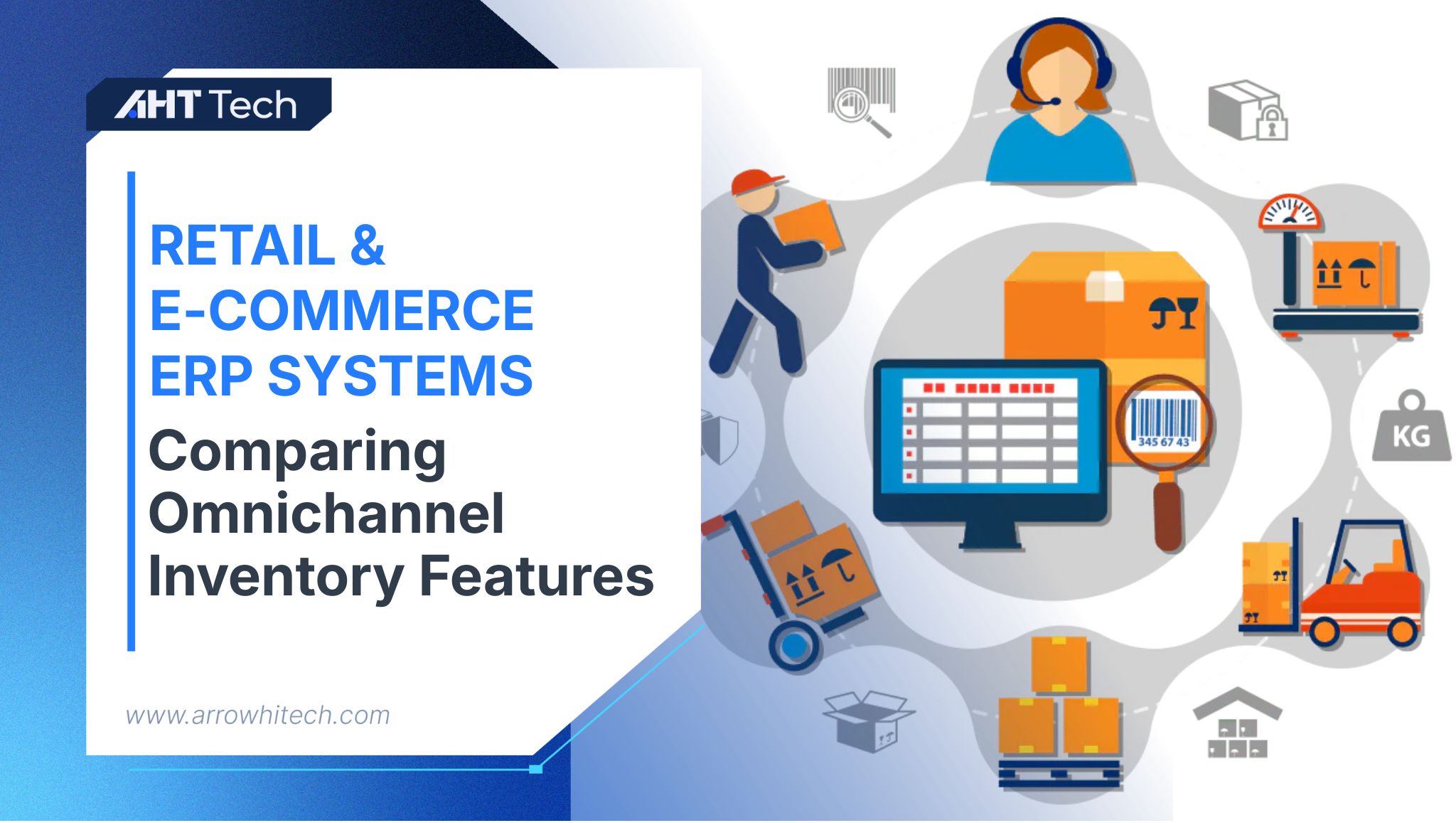
Retailers no longer operate through a single sales channel. A customer may discover a product on social media, check its availability on a website, purchase it through a mobile app, collect it from a nearby store and later return it at another location. Behind this seemingly simple experience is a complex chain of inventory, payment, fulfilment and financial processes. The challenge is that many retail businesses still manage eCommerce, point-of-sale systems, warehouses and accounting through separate applications. Stock movements are transferred between systems through scheduled integrations, spreadsheets or manual updates. Consequently, the inventory shown online may not reflect what is actually available in stores or warehouses. This is why a retail ERP system comparison should look beyond accounting, purchasing and basic inventory control. The most important question is whether the platform can coordinate inventory and orders across every channel in near real time. This guide compares five leading omnichannel ERP systems, focusing on three capabilities that have a direct impact on retail performance: Multi-warehouse inventory synchronisation BOPIS, or Buy Online, Pick Up In Store Point-of-sale and eCommerce integrations Rather than declaring one universal winner, this comparison identifies which ERP is most suitable for different retail operating models.
20 Jul, 2026
Mobile applications now sit at the center of banking, healthcare, retail, logistics, education, and employee operations. They also collect some of the most sensitive information an organization handles: identity details, payment data, location history, health records, behavioral signals, and device identifiers. As global privacy expectations rise, the way an application collects, processes, stores, and deletes this information can determine whether it earns user trust, passes enterprise security reviews, or reaches an app marketplace successfully. For modern mobile app development, privacy cannot be added during final testing. It must influence product discovery, architecture, interface design, API development, analytics, infrastructure, and post-launch operations. The strongest teams treat privacy as a product capability: users understand what is collected, sensitive actions receive stronger protection, and unnecessary data never enters the system. This article explores how zero-trust architecture, hardware-backed security, local data processing, and privacy-by-design practices can help businesses build secure mobile app development that are ready for both regulatory review and long-term user adoption.
SUBSCRIPTION
Find Them Useful?
Subscribe our newsletter to receive the latest news and exclusive advice package from our experts. No spam.